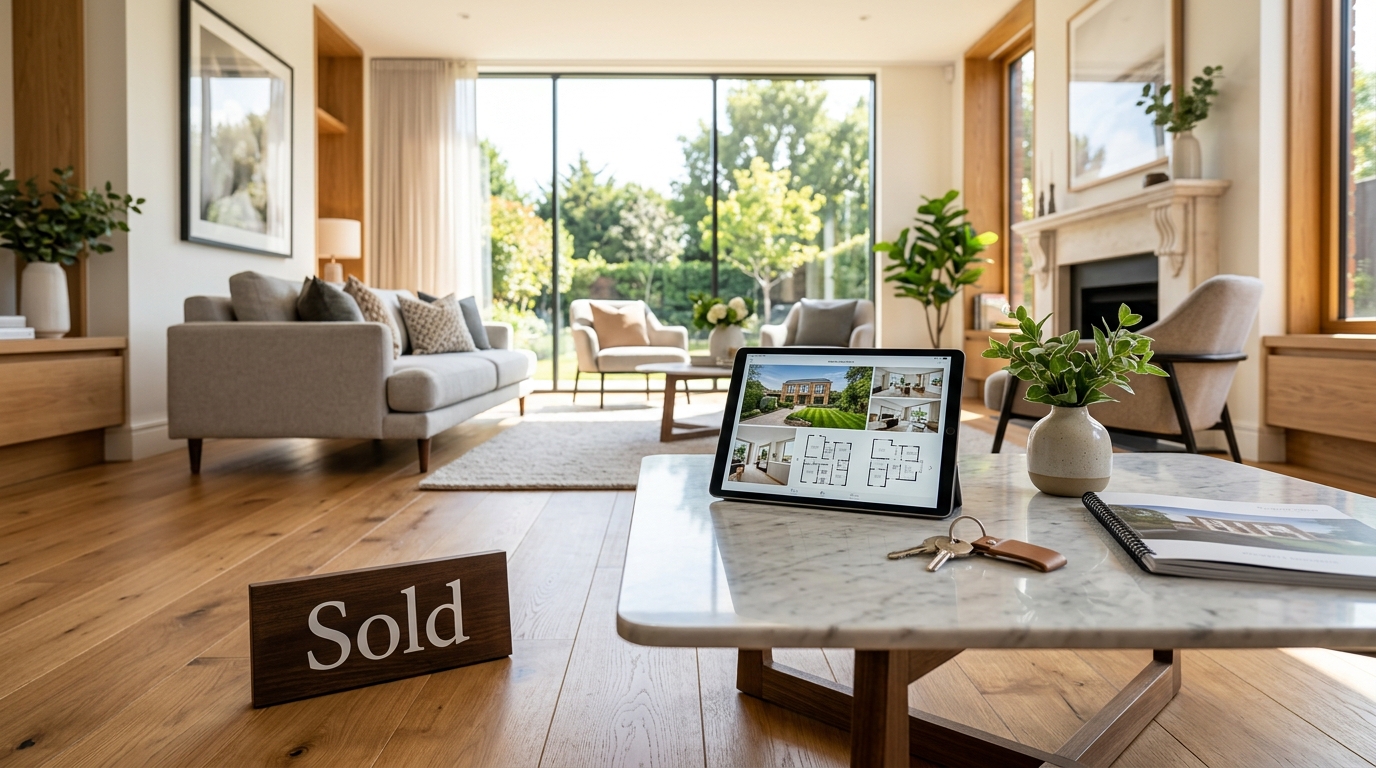
3D Virtual Tours vs. Video Walkthroughs: Which Sells Homes Faster?
A deep dive into the high-tech marketing tools that actually move the needle on your sales cycle.
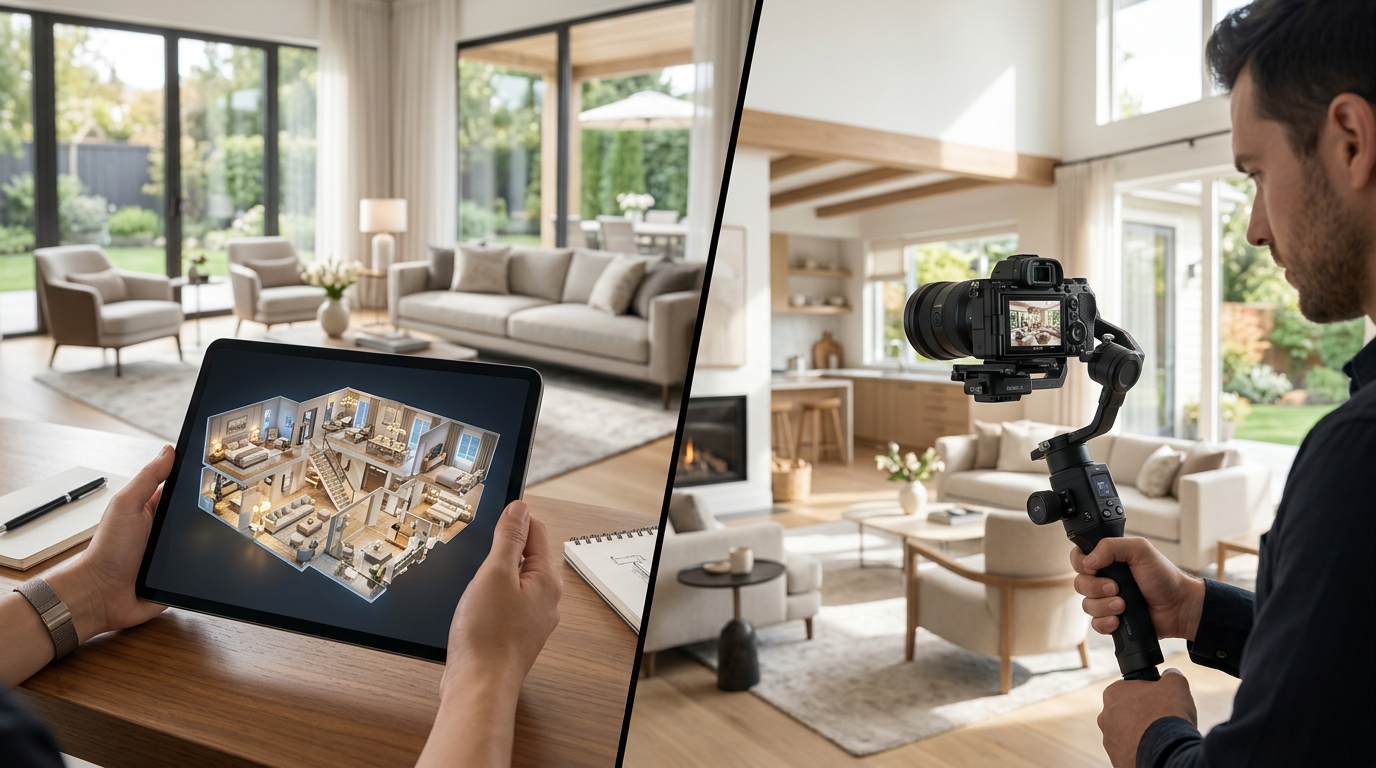
The Great Digital Debate: Interactivity vs. Emotion
You know the feeling. You’ve just landed a killer listing, the staging looks impeccable, and you’re ready to hit the 'Live' button. But then the question hits: Do you invest in a Matterport 3D tour, or do you hire a videographer for a cinematic walkthrough? Or, if you're feeling particularly ambitious, do you try to do both?
In a world where 97% of home buyers start their search online, the 'digital curb appeal' of your listing isn't just a bonus—it’s the entire game. But when it comes to the battle of 3D virtual tours vs. video walkthroughs, the answer to 'which sells homes faster' isn't as binary as you might think. It’s about understanding the psychology of the buyer and the specific goals of your marketing strategy.
Let’s break down the data, the vibes, and the ROI to see which of these heavy hitters deserves a spot in your next listing presentation.
The Case for 3D Virtual Tours: The Ultimate Vetting Tool
3D virtual tours, popularized by companies like Matterport, have completely changed how out-of-state and tech-savvy buyers interact with real estate. Unlike a video, which is a passive experience, a 3D tour is active. The buyer is in the driver’s seat. They can linger in the primary suite for ten minutes, check the size of the pantry, and virtually 'walk' from the garage to the kitchen to see if the layout makes sense for their lifestyle.
Why 3D Tours Help Sell Homes Faster
- Reduced 'Looky-Loo' Traffic: One of the biggest time-wasters for agents is the showing that ends in thirty seconds because the layout 'wasn't what they expected.' A 3D tour acts as a 24/7 open house that pre-screens buyers. By the time someone requests a physical showing, they’ve already mentally moved their furniture in.
- The Zillow Boost: It’s no secret that major portals prioritize listings with interactive content. Listings with a 3D tour often get a significant boost in search results, leading to more eyes and faster clicks.
- Spatial Awareness: Even the best photos can be deceiving. A 3D tour provides a 'dollhouse view' that gives a clear understanding of the home’s flow. If you want to take this a step further, learning how to use professional floor plans to win more listing leads can complement your 3D tour perfectly, giving buyers the technical data they crave.
The Downside of 3D Tours
While 3D tours are great for logic and spatial understanding, they can sometimes feel a bit... clinical. They show the house, but they don't always sell the *home*. They lack the music, the lighting, and the curated 'vibe' that a high-end video can provide.
The Power of Video Walkthroughs: Selling the Dream
If a 3D tour is a map, a video walkthrough is a movie. Video allows you to control the narrative. You aren't just showing a kitchen; you're showing a place where Sunday morning pancakes happen. You aren't just showing a backyard; you're showing a sunset cocktail hour.
The Emotional Edge
Human beings are hardwired for storytelling. A cinematic video walkthrough uses music, pacing, and movement to evoke an emotional response. This is particularly crucial when you are trying to figure out how to market a luxury listing. High-end buyers aren't just buying square footage; they are buying a status and a lifestyle. Video captures that in a way a static 3D scan simply cannot.
Social Media Shareability
Let’s be real: no one is sharing a 3D tour link on their Instagram Stories for fun. But a 60-second, high-energy video walkthrough? That’s gold. Video content is the lifeblood of social media algorithms. If you want your listing to go viral in the local community, video is your best friend. However, the quality matters. You need to know how to write real estate listing video scripts that convert to ensure you're highlighting the right features and not just filming a ceiling fan for five seconds.
Which One Actually Sells Homes Faster?
According to data from various real estate platforms, listings with 3D virtual tours spend an average of 20-30% less time on the market compared to those with only 2D photos. The reason? Transparency. Buyers feel more confident making an offer—or even an offer sight-unseen—when they have explored every nook and cranny of a 3D model.
However, video walkthroughs are often credited with driving *higher* offer prices. Because video builds more emotional urgency and can be shared more easily across social platforms, it tends to generate more 'buzz' and multiple-offer scenarios.
The Comparison at a Glance
| Feature | 3D Virtual Tour | Video Walkthrough |
|---|---|---|
| Primary Goal | Spatial Understanding | Emotional Connection |
| Buyer Action | Active Exploration | Passive Viewing |
| Best For | Out-of-towners, Fixer-uppers | Luxury listings, Lifestyle homes |
| Platform Reach | Zillow/MLS Priority | Social Media/YouTube |
| Time on Market | Significantly Lower | Lower (with more hype) |
The Hybrid Strategy: Why You Shouldn't Choose
If you're asking which one sells homes faster, the honest answer is: **Both.** In a competitive market, the top-performing agents aren't choosing between 3D tours and video; they are using them as a one-two punch.
Think of it this way: The video walkthrough is the 'hook' that stops the scroll on Facebook or Instagram. It creates the 'I want to live there' feeling. Once the buyer clicks through to the listing page, the 3D tour is the 'closer' that confirms the house actually works for their needs.
Before you go all-in on high-tech gear, make sure you've mastered the fundamentals. Even the most expensive 3D camera won't save a poorly lit room. Check out these 10 real estate photography tips that sell homes faster to ensure your baseline quality is where it needs to be.
Practical Scenarios: Which Tool to Reach For?
Scenario A: The Suburban Family Home
For a standard 3-bed, 2-bath family home, a 3D virtual tour is often the better investment. Families are busy. They want to know if the nursery is close enough to the primary bedroom and if the backyard is visible from the kitchen window. A 3D tour answers these practical questions instantly, leading to faster, more qualified showings.
Scenario B: The Modern Downtown Condo
For a sleek condo in a trendy area, go for the video. Highlight the amenities, the walkability, and the view from the balcony. This buyer is likely younger and more influenced by the 'vibe' of the neighborhood. A fast-paced, music-driven video will resonate much more than a clinical scan of a 700-square-foot space.
Scenario C: The Luxury Estate
If the commission is substantial, do both. Use a drone-integrated video walkthrough to show the scale of the property and a 3D tour to allow serious buyers to inspect the custom finishes and layout from anywhere in the world.
The Bottom Line
So, which sells homes faster? **3D virtual tours** generally have a slight edge in reducing days on market because they provide the transparency needed for a buyer to pull the trigger. They eliminate the 'fear of the unknown' that often stalls a deal.
However, **video walkthroughs** are the undisputed kings of lead generation and branding. They get people talking, they get people dreaming, and they get your name in front of potential sellers who want to see that you go the extra mile for your clients.
At the end of the day, your goal is to remove friction from the buying process. Whether you use a 3D tour to prove the floor plan works or a video to prove the lifestyle is worth the price tag, you’re using technology to build trust. And in real estate, trust is the fastest way to a 'Sold' sign.
Ready to Level Up Your Listings?
Don't let your properties sit on the market with yesterday's marketing. Start integrating interactive 3D tours for the 'logic' and cinematic videos for the 'heart.' When you combine both, you aren't just an agent; you're a marketing powerhouse.