7 Visual Strategies to Market a Fixer-Upper and Show Its Potential
Transforming 'Diamond in the Rough' into 'Sold' with Expert Visual Marketing Tactics
The Challenge of the 'Diamond in the Rough'
We’ve all walked into that one listing. You know the one—where the wallpaper is peeling, the carpet hasn’t been updated since the Nixon administration, and there’s a distinct 'aroma' that suggests the windows haven't been opened in years. As a real estate professional, you see the potential. You see the solid oak floors hiding under that lime-green shag and the expansive layout that just needs a few walls knocked down. But for the average buyer? All they see is a massive headache and a dwindling bank account.
Selling a fixer-upper isn't just about finding someone looking for a deal; it’s about selling a vision. In a market where buyers are increasingly visual, you can't rely on their imagination alone. You have to do the heavy lifting for them. If your listing photos only show the 'before,' you're leaving money on the table and extending your days on market.
So, how do you market a property that looks less like a dream home and more like a construction zone? It starts with a shift in your visual strategy. Here are seven ways to bridge the gap between 'what is' and 'what could be.'
1. Leverage Virtual Renovation (Not Just Staging)
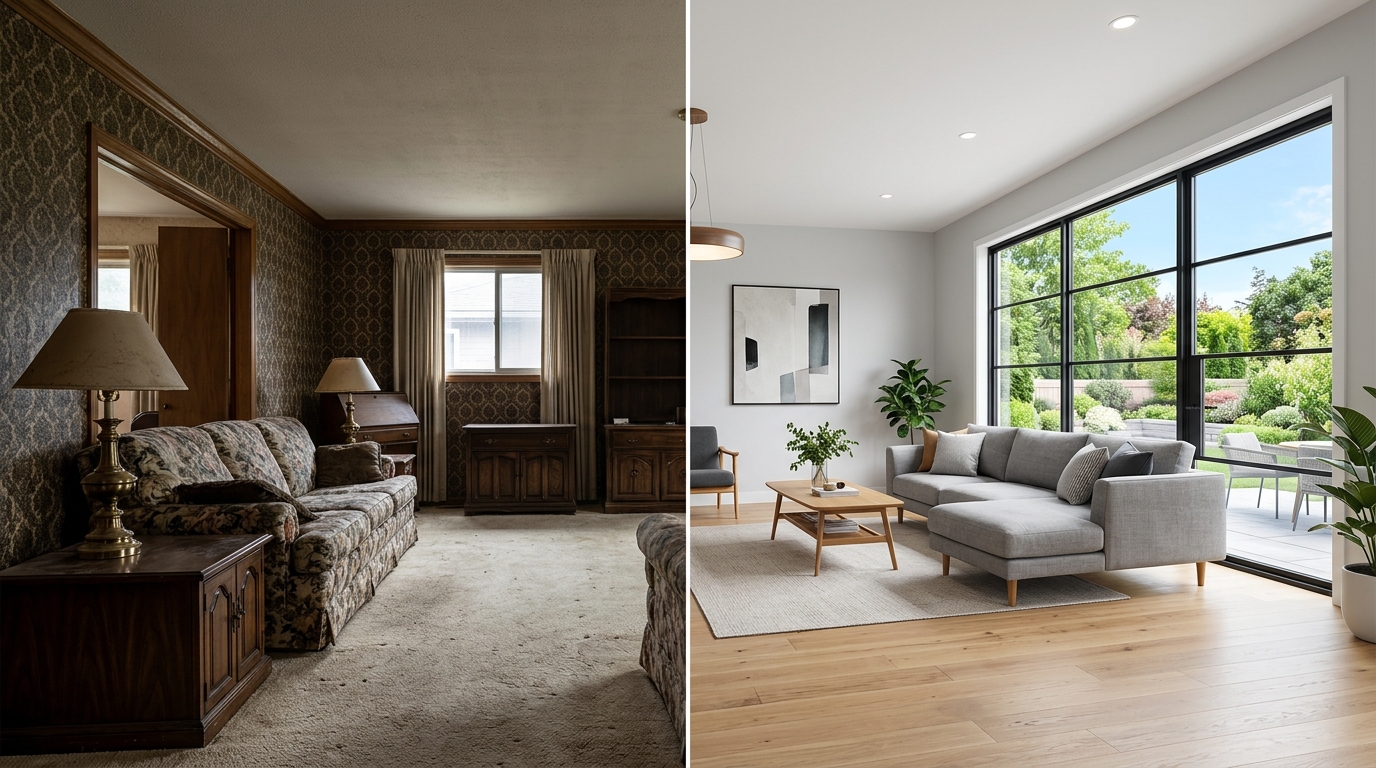
Most agents are familiar with virtual staging, but for a true fixer-upper, you need to go a step further: Virtual Renovation. While standard staging adds furniture to a room, virtual renovation allows you to digitally 'paint' the walls, replace outdated flooring, and even swap out kitchen cabinets or countertops.
When deciding between virtual staging vs. physical staging, the virtual route is almost always superior for distressed properties. Why? Because putting a luxury sofa in a room with holes in the drywall looks ridiculous. Virtual renovation allows you to show a fully finished product. However, transparency is key. Always include the original photo alongside the renovated version in your listing so buyers know exactly what they’re getting.
2. Provide Professional Floor Plans
When a house is cluttered or in disrepair, it’s incredibly difficult for buyers to understand the flow of the home. They get distracted by the mess and lose track of the layout. A professional floor plan acts as a 'reset' button for their brain. It strips away the cosmetic distractions and focuses entirely on the architecture.
There are many reasons to add floor plans to your real estate listing strategy, but for a fixer-upper, the most important one is spatial awareness. A buyer might see a cramped kitchen in person, but on a floor plan, they see that the adjacent wall is non-load-bearing and could easily be removed to create an open-concept living space. You’re selling the footprint, not the finishes.
3. Master the 'Good Bones' Photography
Even the roughest house has something going for it. Maybe it’s the original crown molding, a massive stone fireplace, or a floor-to-ceiling window that overlooks a beautiful backyard. Your job is to find those 'good bones' and make them the stars of your photography.
When photographing a distressed property, lighting is your best friend. Learning how to use natural light in real estate photography can quite literally change the atmosphere of a room. Open every blind, pull back every heavy curtain, and shoot during the 'golden hour' to give the space a warm, inviting glow. Bright, airy photos make a space feel cleaner and more full of potential than dark, shadowy shots ever could.
4. Use 'Before and After' Social Media Teasers
Fixer-uppers are inherently dramatic. People love a good transformation story—it’s why HGTV has been successful for decades. Use this to your advantage on social media. Create 'Before and After' carousels or reels that show the current state of the room followed by a high-quality rendering of what it could look like after a renovation.
This strategy works particularly well on platforms like Instagram and Facebook. It stops the scroll because it triggers the viewer's curiosity. You aren't just selling a house; you're selling a project that has a rewarding conclusion. This approach is also great for attracting investors who are specifically looking for their next flip.
5. Highlight the Neighborhood and Lifestyle
If the house itself is a mess, you need to lean heavily on what *isn't* a mess: the location. You can fix a kitchen, but you can’t fix a bad neighborhood. If the fixer-upper is located in a highly desirable school district, near a popular park, or within walking distance of a trendy coffee shop, make sure your visual marketing reflects that.
Include professional drone shots of the surrounding area. Show the property's proximity to local landmarks. By highlighting the lifestyle the buyer will eventually enjoy once the renovations are complete, you're giving them a reason to endure the dust and the contractor meetings. You're selling the end goal, not just the current struggle.
6. Create a 'Vision' Video Walkthrough
A standard video tour might actually hurt a fixer-upper if it just lingers on the cracks in the ceiling. Instead, create a 'Vision Tour.' Use a gimbal for smooth movement and narrate the tour yourself, or use text overlays to point out the potential.
For example, as the camera pans through a dated bathroom, add a text overlay that says: "Imagine a double vanity here and a walk-in rainfall shower there." By narrating the possibilities, you're guiding the buyer’s eye away from the moldy tile and toward the luxury spa they could create. This helps build an emotional connection to the future version of the home.
7. Focus on 'Clean' Visuals
It sounds simple, but you’d be surprised how many agents photograph fixer-uppers without doing a basic 'trash-out.' Even if the house needs a total gut job, removing old trash, abandoned furniture, and literal dirt will make a massive difference in your photos.
A 'clean' fixer-upper looks like a project; a 'dirty' fixer-upper looks like a disaster. If the seller can't afford a professional cleaning, it's often worth the small investment for you to hire a junk removal service for a few hours. When the photos are crisp and the floors are swept, the buyer can focus on the potential rather than the 'ick' factor.
The Power of Professional Marketing
At the end of the day, marketing a fixer-upper is an exercise in storytelling. You are taking a property that most people would overlook and telling the story of what it could become. By using virtual renovations, floor plans, and strategic photography, you aren't just listing a house—you're offering an opportunity.
Ready to take your listing presentation to the next level? Whether it’s a luxury estate or a diamond in the rough, professional visuals are the key to winning more listings and closing deals faster. Contact The Listing Showcase today to learn how our suite of marketing tools can help you show the true potential of every property you represent.