How to Market Historic Homes: Visual Tips to Highlight Character
Master the art of selling history by capturing the soul and craftsmanship of heritage properties.
The Art of Selling the Past
Imagine walking through a heavy, hand-carved oak door and instantly feeling the weight of a century of stories. There’s a specific creak in the floorboards, the soft glow of original stained glass, and the kind of craftsmanship that modern builders simply don't—or can't—replicate. When you market historic homes, you aren't just selling four walls and a roof; you're selling a legacy. You're looking for a buyer who values provenance over plastic and character over convenience.
But here’s the challenge: how do you translate that 'feeling' into a digital listing? Standard real estate photography often fails to capture the soul of a heritage property. If you treat a 19th-century Victorian the same way you treat a 2024 suburban new build, you’re missing the mark. To truly succeed, your visual strategy needs to pivot from 'showing a house' to 'telling a history.'
In this guide, we’ll dive deep into the visual techniques that make historic properties stand out. From macro photography of period details to narrative-driven video, you’ll learn how to justify a premium price tag by highlighting the irreplaceable character of your listing.
1. Focus on the Craftsmanship: The Macro Approach
In a modern home, the walls are flat and the trim is generic. In a historic home, the magic is in the details. To effectively market historic homes, your photography needs to get up close and personal. Most listing photos are wide-angle shots designed to show space, but with historic properties, you need a healthy mix of 'detail shots.'
Think about the features that a preservation-minded buyer would fall in love with:
- Original Hardware: Those heavy brass doorknobs, intricate keyholes, and hand-forged hinges tell a story of a different era.
- Intricate Woodwork: Capture the grain of original heart pine floors, the complexity of crown molding, or the built-in 'hidden' cabinets in a Craftsman bungalow.
- Fireplace Mantels: Whether it’s hand-carved marble or rustic stone, the fireplace is often the heart of a historic room. Focus on the textures.
By including these close-ups, you signal to the buyer that this home has been cared for and that its original integrity is intact. It builds an emotional connection before they even step foot on the property.
2. The Magic of Atmosphere: Why Twilight Matters
Historic homes often have smaller windows or more compartmentalized layouts than modern open-concept houses. This can sometimes make them feel 'dark' in standard midday photography. The solution? Change the timing. Highlighting the warm, inviting nature of an old home is often best achieved through lighting.
We’ve seen that why twilight photography increases listing views and buyer inquiries is particularly true for heritage estates. When the sun goes down and the interior lights glow through original windows, the home takes on a fairy-tale quality. It emphasizes the 'sanctuary' aspect of the property. The shadows become softer, the textures of the brick or stone exterior become more pronounced, and the home looks like a warm, welcoming piece of history rather than just an old building.
3. Using Lifestyle Photography to Sell a Story
Who is the buyer for a historic home? Usually, it’s someone who envisions a specific lifestyle—perhaps sipping tea in a sun-drenched library or hosting a formal dinner in a room that has seen a hundred years of celebrations. You need to feed that imagination.
Standard staging is fine, but 7 ways to use lifestyle photography to tell a story can take your marketing to the next level. Instead of just a photo of the kitchen, show a close-up of a rustic loaf of bread and a copper kettle on the original farmhouse sink. Show a stack of vintage books on a built-in window seat. These 'lifestyle vignettes' help buyers see themselves living in the home’s history, not just occupying its space.
The 'Then and Now' Comparison
If the sellers have access to archival photos of the home from 50 or 100 years ago, use them! A visual side-by-side comparison in your marketing materials—showing the home in 1920 versus today—is incredibly powerful. It reinforces the home's durability and its status as a local landmark. It tells the buyer, 'You are the next chapter in this story.'
4. Solving the 'Quirky Layout' Problem with Floor Plans
Let’s be honest: historic homes can have some... interesting layouts. You might have to walk through a bedroom to get to a bathroom, or the kitchen might be tucked away in the back of the house. To a modern buyer used to open-concept living, this can be confusing or even off-putting if they only see 2D photos.
This is where technical visuals become your best friend. Knowing how to use professional floor plans to win more listing leads is crucial for historic properties. A clear, dimensioned floor plan helps buyers understand the flow of the home and, more importantly, helps them visualize how their modern furniture and lifestyle will fit into the space. It removes the 'fear of the unknown' that often accompanies older properties.
5. Narrative Video: Walking Buyers Through Time
If a picture is worth a thousand words, a well-produced video is worth a whole history book. For a historic listing, don't just do a 'slideshow' video. Create a narrative tour. Walk through the home and narrate the history of the materials or the architectural style.
Is it a Queen Anne Victorian? Talk about the 'gingerbread' trim and the turret. Is it a Mid-Century Modern gem? Highlight the floor-to-ceiling glass and the connection to nature. When you explain why a feature is significant, you increase its perceived value. A buyer might see an old radiator as a nuisance until you explain it’s a beautifully preserved piece of industrial art that provides the most comfortable heat imaginable.
6. Staging: Balancing Heritage with Modern Comfort
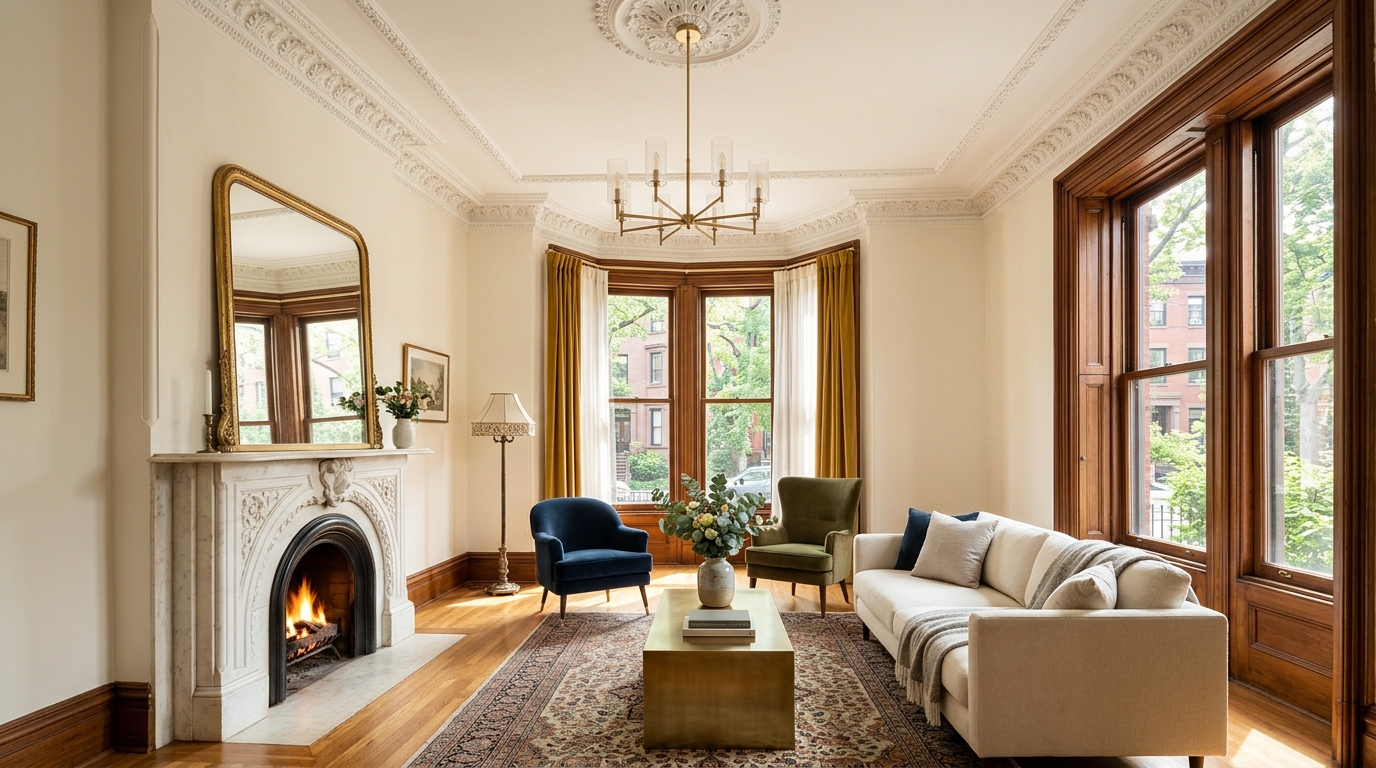
One of the biggest mistakes agents make when marketing historic homes is 'over-staging' with period-accurate furniture. You don't want the house to look like a dusty museum. On the flip side, ultra-modern, minimalist IKEA furniture can look jarring against ornate 1880s plasterwork.
The goal is 'Transitional Staging.' Use furniture that has clean lines but classic silhouettes. This shows the buyer that while the home is historic, it is perfectly functional for a modern life. You want to highlight that they can have their high-speed internet and espresso machine right alongside their 120-year-old fireplace.
Highlighting Modern Upgrades Invisibly
Buyers are often terrified of 'old house problems' like knob-and-tube wiring or ancient plumbing. Use your visual marketing to subtly reassure them. A photo of the beautifully restored (but modern) electrical panel or a shot of the high-efficiency HVAC system tucked discreetly in the cellar can do wonders for a buyer’s peace of mind. It shows that the 'bones' are as good as the 'beauty.'
7. Digital Platforms Where Historic Homes Shine
Not all social media platforms are created equal for historic properties. While Facebook is great for local reach, platforms like Pinterest and Instagram are visual discovery engines where historic home enthusiasts 'hang out.'
- Pinterest: Create boards specifically for the architectural style of your listing. Use high-quality vertical images of the home's best features. People search Pinterest for 'Victorian Restoration Ideas' or 'Historic Home Curb Appeal.' Your listing should be there to meet them.
- Instagram Reels: Use trending audio but keep the visuals elegant. A 'slow-reveal' of a hidden room or a transition shot showing a room during the day vs. at twilight can go viral in the home-decor community.
Closing the Deal on a Piece of History
Marketing a historic home is a labor of love. It requires an agent who can act as both a salesperson and a historian. By focusing on the 'visual soul' of the property—the craftsmanship, the light, the story, and the flow—you elevate the listing from a mere building to an aspirational treasure.
Remember, you aren't just looking for someone with a high enough credit score; you're looking for a steward. When your marketing reflects the dignity and character of the home, you’ll find that steward much faster, and they’ll be willing to pay for the privilege of owning a piece of the past.
Ready to showcase your next historic listing with the professional visuals it deserves? From twilight photography to narrative video tours, The Listing Showcase helps you highlight the character that sells. Contact us today to build your custom marketing package.