7 Tips for Staging an Entryway to Create a Winning First Impression
Transform your foyer from a cluttered drop-zone into a high-impact sales tool that captivates buyers instantly.
The Psychology of the Threshold: Why the Entryway Matters
You’ve heard it a thousand times: you never get a second chance to make a first impression. In real estate, that impression happens the millisecond the front door swings open. While the kitchen might be the heart of the home, the entryway is the handshake. It’s the transition point where a lead stops being a digital browser and starts being a physical visitor. If that transition feels cramped, dark, or cluttered, the buyer's subconscious immediately starts looking for other flaws throughout the house.
Think about it. A buyer has spent weeks looking at perfectly curated photos online. When they finally arrive for a showing, they are looking for validation. They want to feel that the lifestyle promised in the listing is real. If they trip over a stray shoe or get hit with the smell of a damp coat closet, that fantasy evaporates. By focusing on staging an entryway, you aren’t just decorating a hallway; you’re setting the emotional tone for the entire tour.
1. Clear the Clutter to Create 'Breathing Room'
The most common mistake sellers make is treating the entryway like a functional mudroom rather than a staged space. In daily life, we need hooks for keys, racks for shoes, and baskets for mail. During a listing period? All of that has to go. A buyer needs to walk in and feel a sense of expansiveness, even in a small foyer.
Start by removing everything from the floor. Shoes, umbrellas, and pet bowls should be tucked away in a closet or off-site storage. If there is a coat rack, leave it empty or place one high-quality, neutral-toned trench coat on it to suggest a lifestyle without looking messy. When you remove the visual noise, you allow the buyer to focus on the architecture and the flow of the home. This is a key part of using emotional visual triggers in real estate marketing—you want them to imagine their own belongings here, not be distracted by yours.
2. Let There Be Light (And Lots of It)
Entryways are notorious for being the darkest part of a house, often tucked away from primary window sources. A dark entry feels unwelcoming and small. To fix this, you need a multi-layered lighting strategy. First, check your bulbs. Swap out any 'soft white' (yellowish) bulbs for 'daylight' or 'cool white' LEDs (around 3000K-3500K) to make the space feel crisp and modern.
If there’s a window in the door or a sidelight, make sure it’s spotless. If the space still feels dim, add a high-end table lamp to a console table. Lighting isn't just about visibility; it’s about mood. A well-lit entryway signals that the home is well-maintained and cheerful. For those taking their own marketing photos, remember that lighting can make or break the shot, much like the advice found in our guide on 7 curb appeal photography tips to boost online listing click-throughs.
3. Use a Mirror to Double the Space
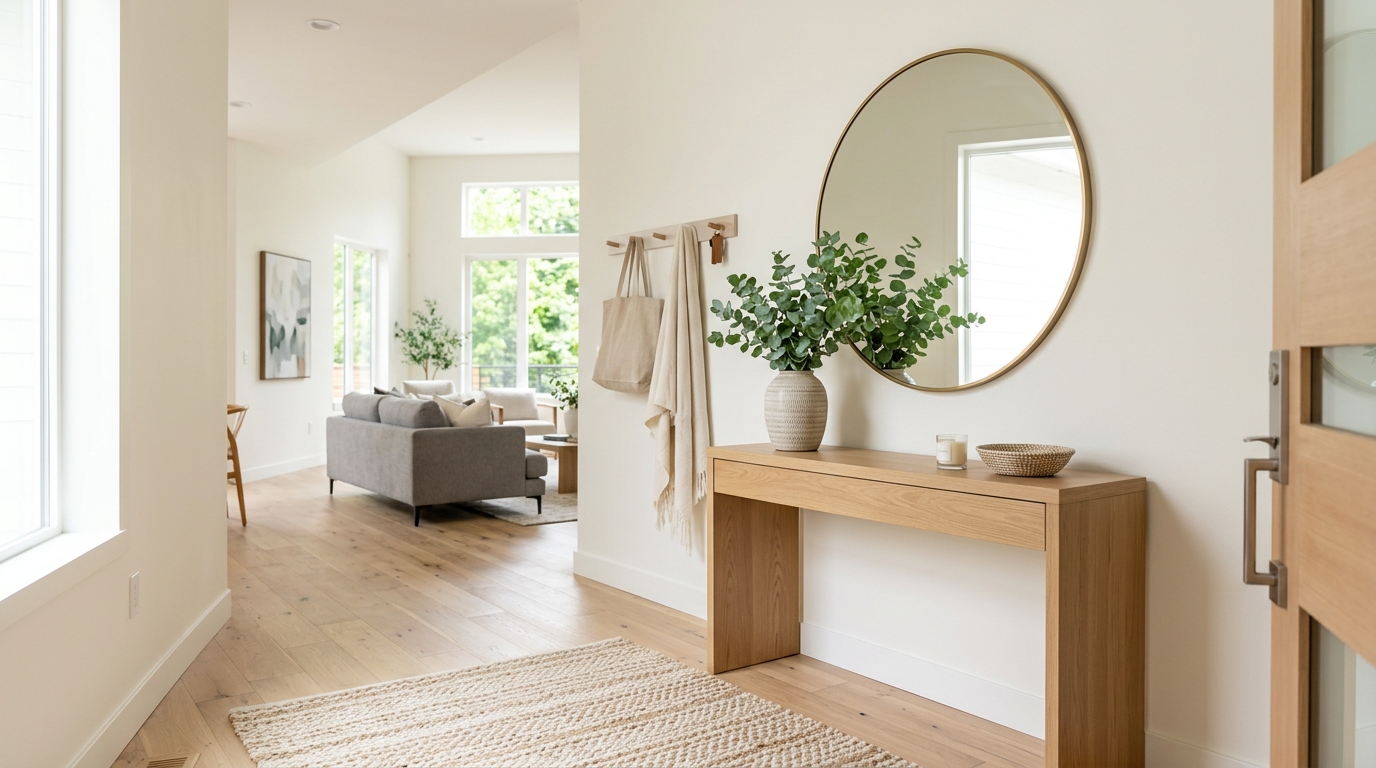
If you're dealing with a narrow hallway or a tiny 'nook' entry, a mirror is your best friend. It’s the oldest trick in the interior design book for a reason: it works. A large, stylish mirror placed above a console table or on a focal wall does two things: it bounces light around the room and creates the illusion of more square footage.
Position the mirror so it reflects something attractive—perhaps a view of the living room or a piece of art—rather than a blank wall or a bathroom door. The goal is to make the space feel 'boundless.' When a buyer sees their own reflection in a beautiful, well-staged space, they subconsciously begin to see themselves living in the home.
4. Define the Space with a Statement Rug
Without a rug, an entryway can feel like a cold transition zone. A rug 'grounds' the space and defines it as a room in its own right. However, avoid the 'shaggy' look which can hold onto dirt and allergens. Instead, opt for a low-pile runner or a high-quality jute rug that adds texture without the bulk.
The rug should be proportional to the space. A rug that is too small looks like an afterthought, while one that is too large can make the walls feel like they’re closing in. Choose colors that complement the rest of the home’s palette. If you’re unsure about which hues to pick, check out our deep dive into 7 ways to use color psychology in home staging to ensure you’re picking tones that evoke feelings of calm and luxury.
5. The 'Console Table' Strategy
Unless the entryway is incredibly narrow, it needs a piece of furniture to act as an anchor. A slim console table is the gold standard for staging an entryway. It provides a surface for 'lifestyle' vignettes—a small tray, a stack of two high-end design books, and a vase of fresh greenery.
Keep the styling minimal. One or two larger items are always better than five small ones. A single, large glass vase with eucalyptus branches looks intentional and expensive. Avoid 'knick-knacks' that collect dust. The goal is to create a 'vignette' that looks like it belongs in a magazine, giving the buyer the immediate impression that this is a high-end property.
6. Appeal to the Senses (Subtly)
Staging isn't just visual; it's experiential. When a buyer enters, their sense of smell is the first thing to react. Avoid heavy 'plugin' air fresheners or scented candles, which can trigger allergies or make buyers wonder what smells you're trying to hide. Instead, aim for 'clean.' A light, citrus or linen scent is generally safe.
Consider the acoustics as well. If the entryway has hard floors and high ceilings, it might echo, which can feel cold. The rug mentioned earlier helps with this, but you can also add soft elements like a single upholstered bench or high-quality curtains on nearby windows to dampen sound. A quiet, hushed entry feels much more luxurious than a clanging, echoing one.
7. Create a Clear Path and Sightline
Finally, stand at the front door and look straight ahead. What is the first thing you see? This is your 'primary sightline.' If the first thing a buyer sees is the back of a sofa or a cluttered kitchen counter, you need to adjust the layout. You want the entryway to draw the eye toward the home’s best features.
Ensure there is a clear, unobstructed path into the main living areas. If a piece of furniture—even a beautiful one—blocks the natural flow of traffic, it has to go. Buyers should be able to walk in and move naturally through the house without having to navigate an obstacle course. This sense of 'flow' is what makes a house feel like a home.
Bringing It All Together
Staging an entryway is about more than just aesthetics; it’s about managing the buyer’s transition from the outside world into the 'dream' of the home. By clearing clutter, maximizing light, and using strategic furniture and mirrors, you create a space that feels inviting, expensive, and ready for a new owner. Remember, you only get one chance to make that first impression—make sure your entryway is doing the heavy lifting for you.
Ready to take your listing marketing to the next level? At The Listing Showcase, we specialize in the premium visuals that get buyers through that front door in the first place. From professional photography to immersive tours, we help you justify your commission and sell homes faster.