7 Visual Marketing Tips for Historical Homes
How to capture the soul of heritage properties and attract the right buyers.
The Unique Challenge of Marketing Historical Homes
There is a specific feeling you get when walking into a 100-year-old Victorian or a mid-century modern masterpiece. It’s the slight creak of original white oak floors, the weight of a solid brass door handle, and the way the afternoon sun hits the hand-rolled glass of a bay window. These homes aren't just structures; they are stories. But here’s the problem: how do you bottle that soul up and put it into a Zillow thumbnail?
Marketing historical homes requires a completely different playbook than selling new construction. When you're dealing with heritage properties, you aren't just selling square footage or a modern kitchen; you’re selling a piece of history and a specific lifestyle. If your visual marketing treats a 1920s Craftsman like a 2024 suburban tract home, you’re leaving money on the table. You need to evoke emotion, respect the craftsmanship, and help the buyer see themselves as the next steward of the home’s legacy.
Ready to level up your listing game? Let’s dive into seven visual marketing strategies specifically designed to showcase the charm of historical properties.
1. Capture the "Soul" with Macro Detail Shots
In a standard listing, you usually focus on wide-angle shots to show the size of the room. While that’s necessary, historical homes live and die by the details. If you only show the wide shot, the buyer misses the very things that make the home worth a premium.
Ask your photographer to spend twenty minutes just on "vignettes" and macro shots. What should you look for? Think about:
- Intricate crown molding and ceiling medallions.
- Original glass doorknobs or ornate backplates.
- Stained glass windows and the colorful shadows they cast.
- The texture of original brickwork or hand-carved mantels.
- Built-in cabinetry with period-correct hardware.
When these photos appear in your marketing materials, they act as emotional triggers. They tell the buyer, "This home was built by hand, and it has character you won't find anywhere else." It’s these small details that often justify a higher asking price for a smaller square footage compared to modern builds.
2. Use Twilight Photography to Evoke Emotion
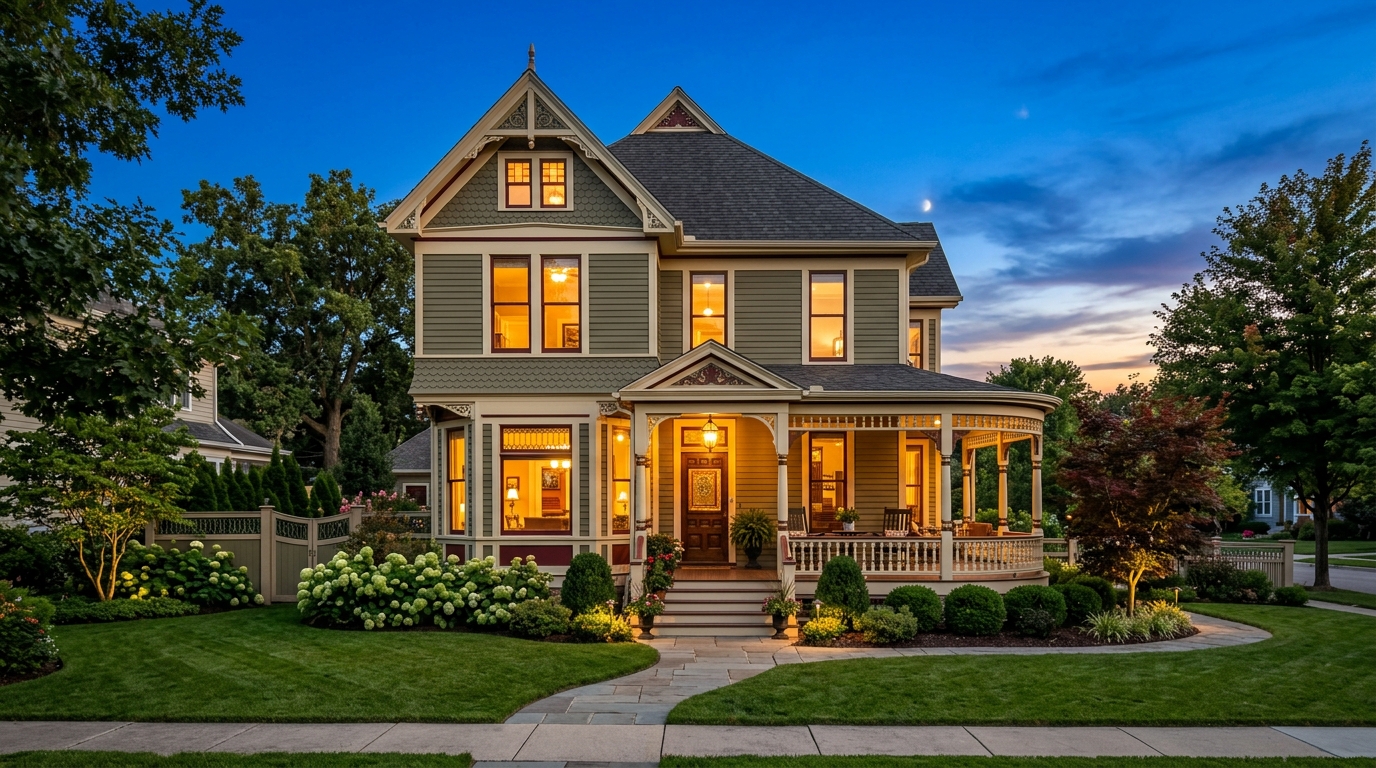
Historical homes often have dramatic architectural silhouettes—think of the gables of a Queen Anne Victorian or the low-slung lines of a Prairie-style home. During the bright midday sun, these features can sometimes look flat or busy. But at dusk? That’s when the magic happens.
Using 7 twilight photography tips to make luxury listings stand out can transform a historical property from "old house" to "enchanted estate." The warm glow of interior lights through original windows creates a sense of coziness and mystery. It invites the buyer to imagine pulling into the driveway after a long day and seeing their beautiful, historic sanctuary lit up against a deep blue sky.
Twilight photography also helps mask some of the minor exterior imperfections that naturally come with age, allowing the architectural form and the "glow" of the home to take center stage.
3. Bridge the Gap with Sensitive Staging
One of the biggest hurdles in marketing historical homes is the "grandma’s house" syndrome. If the home is filled with heavy, dated furniture that hasn't been moved since 1974, buyers struggle to see how their modern lives fit in. Conversely, if you put ultra-modern, minimalist furniture in a Tudor revival, it can feel jarring and disrespectful to the architecture.
The key is "Transitional Staging." This means mixing modern, clean-lined furniture with the home’s original features. You want to show that a 65-inch OLED TV and a sectional sofa can actually look great in a room with 11-foot ceilings and a coal-burning fireplace.
If the home is currently empty, you have a big decision to make. You should weigh the pros and cons of virtual staging vs. physical staging. For historical homes, physical staging is often superior because it allows buyers to feel the scale of the rooms during tours. However, if the budget is tight, high-quality virtual staging can help illustrate how to modernize the space without stripping away its soul.
4. Highlight the Craftsmanship with Cinematic Video
Static photos are great, but they don't capture the "flow" of an old house. Historical homes often have unique layouts—parlors that lead into dining rooms through pocket doors, or "secret" back staircases for servants. A cinematic video tour allows you to tell a narrative story.
Instead of a fast-paced, high-energy edit, go for something slower and more atmospheric. Use a gimbal for smooth, slow-motion pans over the wood grain of the banister. Use a shallow depth of field to focus on a skeleton key turning in a lock. You want the viewer to feel like they are walking through a piece of art.
Consider adding a voiceover or text overlays that explain the history. "Built in 1912 for the city’s first mayor," or "Original heart pine floors restored to their former glory." This adds a layer of prestige that a standard photo gallery simply cannot provide.
5. Provide Floor Plans to Explain the Flow
Let’s be honest: historical homes can have some... interesting layouts. Closets in weird places, bathrooms tucked under stairs, or rooms that you have to walk through to get to other rooms. In a photo gallery, this can be confusing and might even scare off buyers who think the house is "choppy."
This is one of the most important reasons to add floor plans to your real estate listing strategy. A 2D or 3D floor plan gives the buyer a map to navigate the photos. It helps them understand that the "weird little room" off the kitchen is actually a perfect butler's pantry or a sun-drenched breakfast nook. By providing clarity on the layout, you remove the friction of uncertainty, making them more likely to book a showing.
6. Master the Use of Natural Light
Historical homes were built before the era of ubiquitous overhead LED lighting. They were designed to maximize natural light through large windows, transoms, and light wells. However, because of old-growth trees or deep porches, they can sometimes photograph as "dark" or "moody."
Work with a photographer who understands how to balance flash with ambient light. You don't want the home to look like a bright, sterile hospital wing—that kills the charm. You want to preserve the shadows and the depth while ensuring the beautiful woodwork is visible.
Pro tip: Schedule your shoot based on the home's orientation. If the home has a stunning stained-glass window facing east, make sure you're there in the morning to catch the light streaming through the colored glass. That single photo could be the "hero shot" that sells the house.
7. Sell the History, Not Just the House
When someone buys a historical home, they are often buying into a community or a historic district. Your visual marketing shouldn't stop at the property line. You need to show the context of the neighborhood.
Include shots of:
- The tree-lined street with other well-preserved homes.
- Local landmarks or the historic town square.
- The "Historic District" signage.
- Nearby parks that have been around as long as the house.
By including these visuals, you’re telling the buyer that they aren't just buying a house; they are becoming part of a legacy. You're selling the lifestyle of Saturday morning walks to the local bistro and the pride of owning a piece of the city's heritage.
Final Thoughts: The Power of Narrative
Marketing a historical home is an exercise in storytelling. Every creak, every piece of hand-carved wood, and every original fixture is a plot point in that story. Your job as a real estate professional is to ensure that story is told with the respect and visual high-fidelity it deserves.
By focusing on the details, using the right lighting, and providing the structural context of a floor plan, you do more than just list a property—you curate an experience. And in the world of high-end real estate, the agent who can curate the best experience is the one who wins the listing and the top-dollar sale.
Ready to Make Your Historical Listing Shine?
At The Listing Showcase, we specialize in premium visual marketing that captures the unique character of every property. From stunning twilight photography to detailed floor plans, we have the tools you need to stand out. Contact us today to book your next shoot!