7 Visual Marketing Tips for Out-of-State Relocation Buyers
How to build trust and close deals with buyers who haven't stepped foot in the home
The Remote Buyer’s Dilemma
Imagine you’re a family moving from the bustle of New York City to the suburbs of Charlotte. You have three kids, a golden retriever, and a job that starts in precisely twenty-one days. You don’t have the time—or the budget—to fly down every weekend for 15-minute showings. How do you decide which house is "the one"?
For relocation buyers, the screen isn't just a research tool; it’s their only window into their future life. If your visual marketing is thin, they won’t just skip your listing—they’ll feel they can’t trust the property. To win over these high-intent buyers, you have to bridge the physical gap with immersive, high-fidelity content that answers their questions before they even ask them.
1. Go Beyond Photos with 3D Virtual Tours
Standard photography is great for showing how a house looks, but it’s terrible at showing how a house feels. A relocation buyer needs to understand the flow of the home. Can they hear the TV in the living room from the primary suite? Is the walk from the garage to the kitchen awkward with groceries?
Tools like Matterport or Zillow 3D Home allow buyers to "walk" through the property at their own pace. It gives them a sense of autonomy that a static gallery can’t provide. When a buyer spends 20 minutes clicking through a 3D tour, they are mentally moving their furniture into the space. That emotional investment is what leads to sight-unseen offers.
2. Sell the Neighborhood, Not Just the House
When someone moves from out of state, they aren't just buying four walls and a roof; they are buying a new lifestyle. They want to know where the nearest coffee shop is, what the local park looks like, and if the commute to the tech corridor is actually manageable.
Don't stop at the property line. Include high-quality shots of local landmarks, trendy dining districts, and nearby nature trails. For a deeper dive into this strategy, check out our guide on 7 tips for using neighborhood visuals to sell the local lifestyle. By showing the surrounding area, you reduce the "fear of the unknown" that often paralyzes out-of-state shoppers.
3. Provide Professional Floor Plans with Measurements
One of the biggest frustrations for remote buyers is spatial awareness. A wide-angle lens can make a 10x10 bedroom look like a palace, leading to major disappointment (or a canceled contract) later.
Providing a clear, professional floor plan is a non-negotiable for relocation listings. It allows buyers to see the exact dimensions and how rooms relate to one another. We've actually detailed 7 reasons to add floor plans to your real estate listing strategy, highlighting how they can significantly increase engagement from serious out-of-town investors and families alike. It’s about transparency—and transparency builds the trust required for a long-distance transaction.
4. Use Narrated Video Walkthroughs
A drone flying through a house with upbeat royalty-free music is nice, but it doesn't provide much context. For a relocation buyer, a narrated video walkthrough is far more valuable.
Get in front of the camera or provide a voiceover. Point out the things a camera might miss: "You'll notice the original hardwood floors have been meticulously maintained," or "This window gets incredible morning light." This humanizes the experience and makes you, the agent, their boots-on-the-ground expert. If you're struggling with what to say, explore these 5 real estate listing video scripts to grab attention instantly to help you find the right tone.
5. Leverage Drone Footage for Geographic Context
Out-of-state buyers often worry about what’s next to the house. Is there a highway just behind those trees? Is the neighbor’s yard a junkyard? Is it truly a five-minute walk to the beach?
Drone photography and videography provide the "God's eye view" that provides peace of mind. Use aerial shots to show the property's proximity to schools, water features, or downtown areas. Annotate your drone shots with text overlays to point out key locations. It’s about proving the listing’s value within the broader map of the city.
6. Virtual Staging for Remote Visualization
Empty houses are notoriously difficult to judge on a screen. Without furniture, it’s hard to tell if a room is a bedroom or an office, or if a king-sized bed will actually fit.
Virtual staging is a cost-effective way to show the potential of a home to someone who can’t visit in person. You can even create multiple versions of the same room—for example, showing a spare room as both a nursery and a high-end home office. This helps a wide range of relocation buyers see themselves in the space, regardless of their specific family situation.
7. Create a Dedicated Single-Property Website
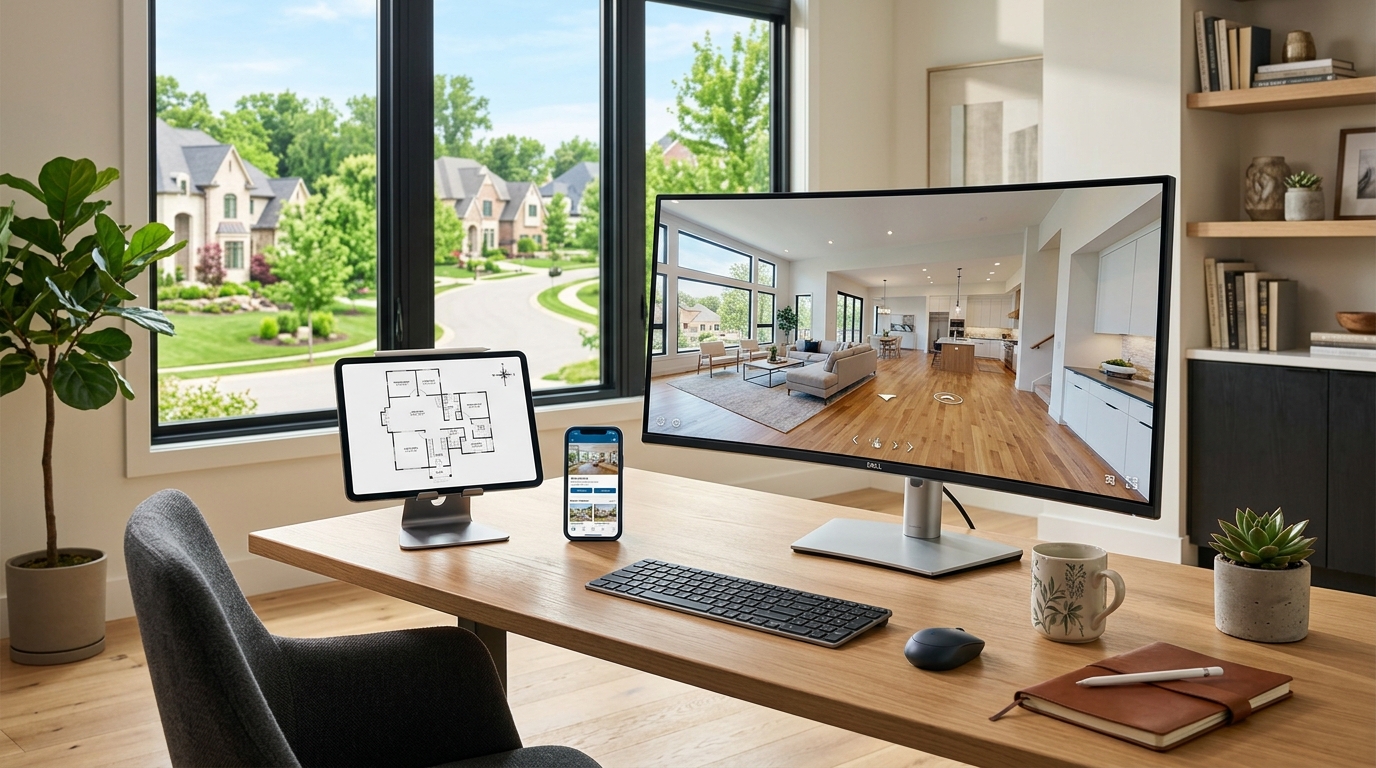
When a buyer is 500 miles away, they are likely juggling dozens of tabs on Zillow and Redfin. Your listing can easily get lost in the noise. A single-property website acts as a centralized hub for all your high-end visuals—the 3D tour, the floor plans, the narrated video, and the neighborhood gallery.
It feels more exclusive and professional. It also allows you to control the narrative without the distractions of "similar listings" popping up at the bottom of the page. Send the link directly to the buyer's agent; it makes their job easier and makes your listing the gold standard of their search.
Final Thoughts: Building the Bridge
Attracting out-of-state relocation buyers is all about removing friction. Every high-quality visual you provide—whether it’s a detailed floor plan or a sweeping drone shot of the local park—removes a question mark. When you remove enough question marks, the buyer feels confident enough to make an offer. In the world of relocation, the agent who provides the most clarity is the agent who wins the deal.
Ready to level up your listing game? At The Listing Showcase, we specialize in the high-end visual marketing tools you need to capture attention from across the country. Let's make your next listing impossible to ignore.