How to Stage Small Spaces: 7 Tips to Make Tiny Rooms Look Massive
Master the art of maximizing square footage to win over buyers and sell compact homes faster.
The Big Challenge of Small Spaces
We’ve all been there. You walk into a new listing, and while the location is prime and the price is right, the square footage feels... well, let’s just say "intimate." As a real estate professional, your heart might sink a little when you see a bedroom that barely fits a twin bed or a living area that feels more like a hallway. You know that when buyers feel cramped, they start subtracting dollars from their offer in their heads.
But here’s the secret: space is often a matter of perception. With the right staging techniques, you can transform a claustrophobic box into an airy, inviting retreat. Learning how to stage small spaces isn't just about cleaning up; it’s about strategic visual manipulation. When you make tiny rooms look massive, you aren’t just selling a property—you’re selling a lifestyle that doesn't feel limited by four walls.
At The Listing Showcase, we’ve seen how high-end visuals and smart staging can turn even the tightest urban condo into a hot commodity. If you're looking for 7 visual marketing tips to sell a modern condo in a high-rise, you already know that presentation is everything. Now, let’s dive into the tactical ways you can physically (and virtually) expand your listings.
1. The "Leggy" Furniture Rule
If you want a room to feel bigger, you need to show off the floor. It sounds simple, but it’s one of the most effective tricks in the book. When a buyer can see the floor extending all the way to the baseboards, their brain perceives the room as larger. Bulkier furniture that sits flat on the ground acts like a visual anchor, cutting off the line of sight and making the room feel chopped up.
Choose Raised Profiles
Instead of a heavy, skirted sofa, opt for a mid-century modern piece with tapered legs. Instead of a solid block of a nightstand, use a floating shelf or a thin-legged metal table. This creates a sense of "airiness" and allows light to flow under the furniture, tricking the eye into seeing more square footage than actually exists.
2. Master the Art of Scale
A common mistake agents make when staging small spaces is filling them with tiny furniture. It seems logical, right? Small room, small chair. In reality, a room filled with several small pieces often looks cluttered and "dollhouse-like," which actually emphasizes the lack of space.
Go Big (Strategically)
One large, well-placed sectional can often make a small living room look bigger than a cramped loveseat and two awkward armchairs. The goal is to have fewer, more impactful pieces. This creates a cleaner silhouette and reduces visual noise. When you’re dealing with tricky layouts, remember that buyers often struggle to visualize how their own things will fit. This is why many agents find that 7 reasons to add floor plans to your real estate listing strategy include helping buyers understand the true dimensions before they even step through the door.
3. Use Mirrors to Create Infinite Depth
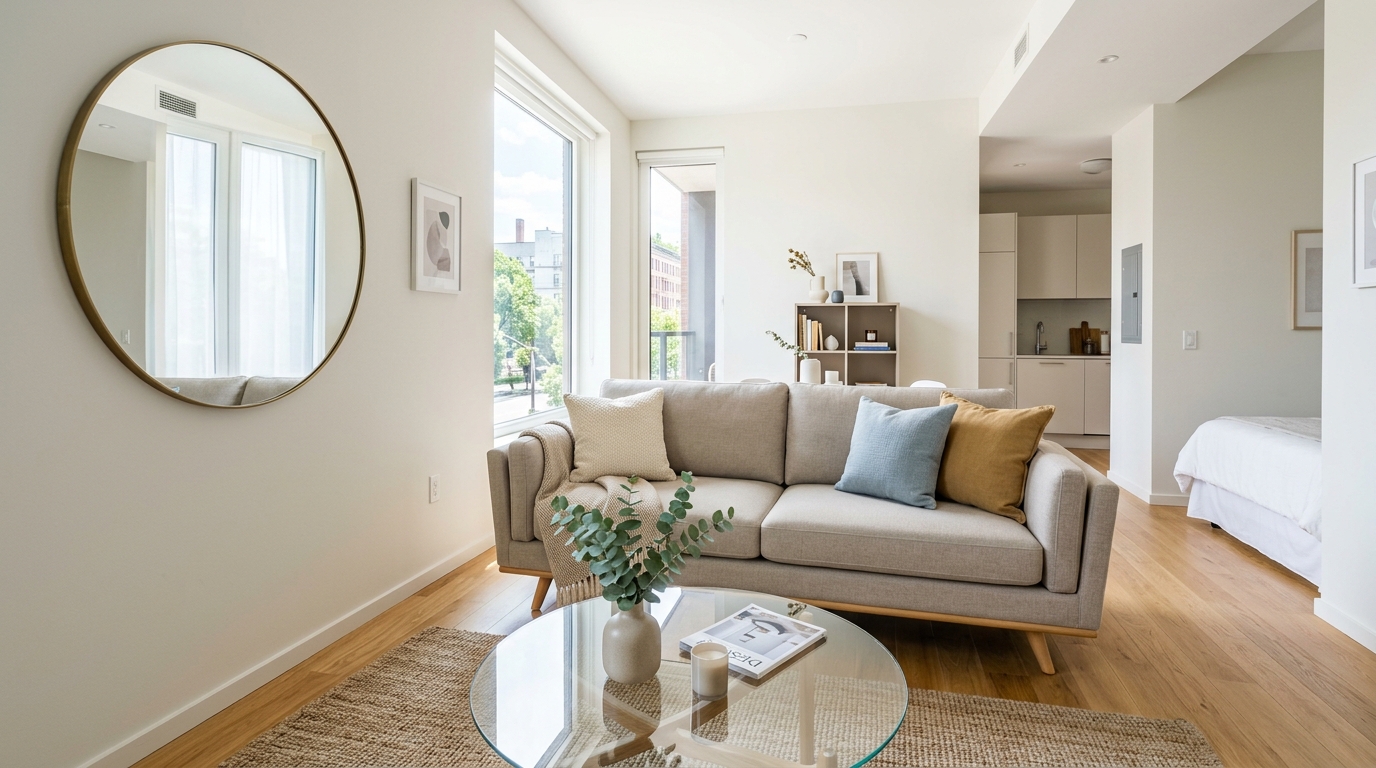
Mirrors are the oldest trick in the staging playbook for a reason—they work. A large mirror doesn’t just reflect light; it creates a "window" where there isn't one. It tricks the eye into believing there is another room or more depth beyond the wall.
Placement is Key
Don't just hang a mirror anywhere. Place it across from a window to bounce natural light throughout the room. If the room lacks a view, place a large floor mirror behind a piece of furniture, like a console table. This creates the illusion that the room continues behind the table. In dining areas, a mirrored wall or a large horizontal mirror can make a narrow space feel twice as wide. If you're prepping for a shoot, check out our guide on how to stage a dining room for photos to see how reflection and light play a role in making a space feel inviting.
4. Leverage Color Psychology and Monochromatic Palettes
Color has a profound impact on how we perceive volume. Dark colors absorb light, making walls feel like they are closing in. While moody rooms are trendy, they are dangerous for small-space staging unless you have incredible natural light.
The Power of Low Contrast
To make a room feel massive, stick to a light, neutral, and monochromatic color palette. When the walls, trim, and even the furniture are similar shades (think whites, creams, and soft greys), the boundaries of the room blur. Without sharp color contrasts to catch the eye, the space feels continuous and open. For more on this, explore 7 ways to use color psychology in home staging to speed up sales to understand how different hues affect buyer emotions and spatial perception.
5. Draw the Eye Upward
If you can't expand the room horizontally, expand it vertically. When a buyer walks into a small room, you want their eyes to travel from the floor to the ceiling. This emphasizes the volume of the space rather than just the floor area.
- High Curtains: Hang curtain rods as close to the ceiling as possible, rather than right above the window frame. This makes the windows look larger and the ceilings look higher.
- Vertical Shelving: Use tall, narrow bookshelves rather than wide, short ones.
- Statement Lighting: A beautiful pendant light or chandelier can draw the eye up, making the vertical space a feature of the room.
6. De-Clutter and Curate Ruthlessly
In a large home, a few stray books or a collection of vases might look like "character." In a tiny room, they look like a mess. Clutter is the enemy of square footage. Every item on a surface is a "visual stop" that makes the room feel smaller.
The 60/40 Rule
A good rule of thumb for staging small spaces is to leave about 40% of every surface empty. This includes coffee tables, kitchen counters, and bookshelves. This "white space" allows the eye to rest and creates a sense of calm. Remember, you aren't just cleaning; you are curating. If an item doesn't serve a functional or major aesthetic purpose, it should be packed away before the photographer arrives.
7. Maximize Natural Light and Transparency
A dark room is a small room. Even the largest hall will feel cramped if the corners are in shadow. Your goal is to flood the space with as much light as possible. Remove heavy drapes and replace them with sheer panels—or better yet, leave the windows bare if privacy isn't an issue.
The Ghost Furniture Effect
Consider using materials that don't take up "visual weight." Glass or acrylic (often called "ghost") coffee tables and desks are perfect for small spaces because you can see right through them. They provide the necessary surface area without cluttering the line of sight. This keeps the room looking open and flowing.
Putting It All Together: A Real-World Scenario
Imagine you’re listing a 500-square-foot studio. It’s currently filled with the owner's oversized leather recliner, a dark mahogany desk, and heavy navy blue curtains. It feels like a cave. By applying these tips—swapping the recliner for a slim-profile chair, replacing the desk with a glass console, painting the walls a soft off-white, and hanging a large mirror opposite the balcony door—you’ve suddenly added 20% to the *perceived* value of that home.
Buyers don't buy square footage; they buy how a space makes them feel. If they feel like they can breathe, they’ll want to live there.
Ready to Showcase Your Listings?
Staging is only half the battle. Once you’ve made that tiny room look massive, you need to capture it perfectly. High-quality photography and strategic marketing are what get buyers through the door to see your hard work in person. At The Listing Showcase, we specialize in helping real estate professionals stand out with premium visual marketing tools.
Are you ready to take your listings to the next level? Whether it's through professional photography, floor plans, or single-property websites, we help you prove your value to sellers and win more listings. Contact us today to see how we can transform your next small space listing into a big success.