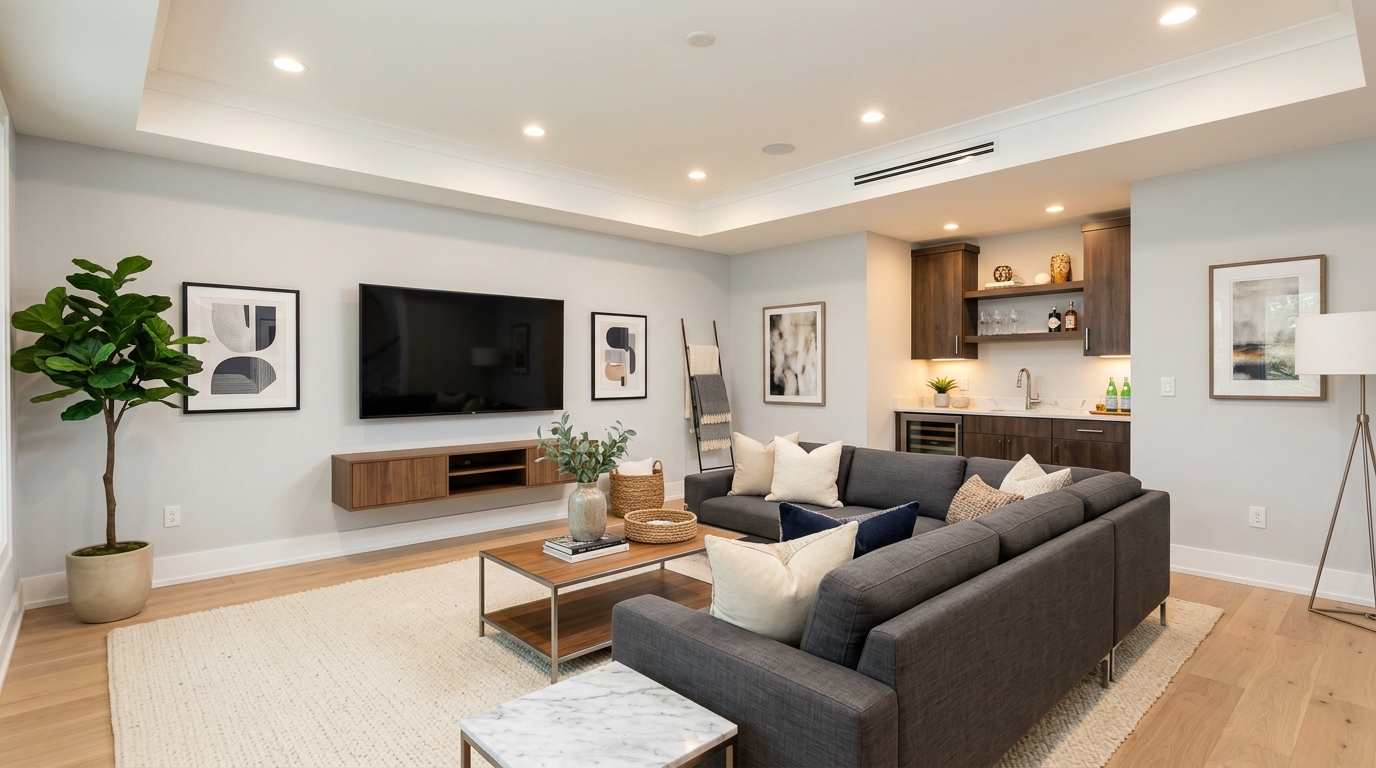
Virtual Staging vs. Physical Staging: Which Offers Better ROI?
Deciding between digital magic and traditional furniture to maximize your listing's profit.
The Great Staging Debate: Beyond the Furniture
You’ve just signed the paperwork for a stunning new listing. It’s got great bones, high ceilings, and incredible natural light. There’s just one problem: it’s completely empty. Or worse, it’s filled with the seller’s collection of 1970s floral wallpaper and bulky recliners that make the living room look like a closet.
As an agent, you know that an empty house feels cold and smaller than it actually is. You also know that buyers aren't just looking for square footage; they're looking for a lifestyle. But when it comes to bringing that lifestyle to life, you’re faced with a classic dilemma: Do you go the traditional route with physical staging, or do you opt for the modern efficiency of virtual staging?
This isn't just a design choice—it's a financial one. Every dollar you or your client spends on marketing needs to work hard. In this guide, we’re going to dive deep into the ROI of virtual vs. physical staging so you can make the best call for your next listing and your bottom line.
The Psychology of Space: Why Empty Homes Struggle
Why do we even bother with staging? According to the National Association of Realtors (NAR), 82% of buyers’ agents said staging a home made it easier for a buyer to visualize the property as a future home. Humans, for all our creativity, generally have a hard time imagining how a 15x20 room actually functions without visual cues.
When a room is empty, buyers focus on the wrong things. They notice the tiny nick in the baseboard or the slight discoloration in the corner of the hardwood. Staging directs their eyes toward the possibilities. For more on the fundamentals of this process, check out our guide on Staging Your Home for Sale: Maximize Offers & Appeal.
Physical Staging: The Traditional Powerhouse
Physical staging is exactly what it sounds like: a professional stager brings in actual furniture, rugs, art, and accessories to decorate the home. It’s been the gold standard for decades, and for good reason.
The Pros of Physical Staging
- The In-Person Experience: When a buyer walks through the front door, the home feels finished. They can sit on the sofa, feel the textures, and experience the flow of the room in real-time.
- Emotional Connection: There is a tactile, sensory element to physical staging that digital images can't quite replicate. The smell of a candle or the sight of a perfectly set dining table creates an immediate emotional hook.
- Masking Imperfections: Physical furniture can help distract from minor layout quirks or awkward architectural angles that might look strange in an empty photo.
The Cons: Time, Money, and Logistics
The biggest hurdle with physical staging is the cost. Depending on your market and the size of the home, professional staging can cost anywhere from $2,000 to $10,000+ for a three-month contract. There’s also the logistical nightmare of scheduling movers, the risk of damage to floors during install, and the fact that the home is essentially "frozen" in one design style.
Virtual Staging: The Digital Disruptor
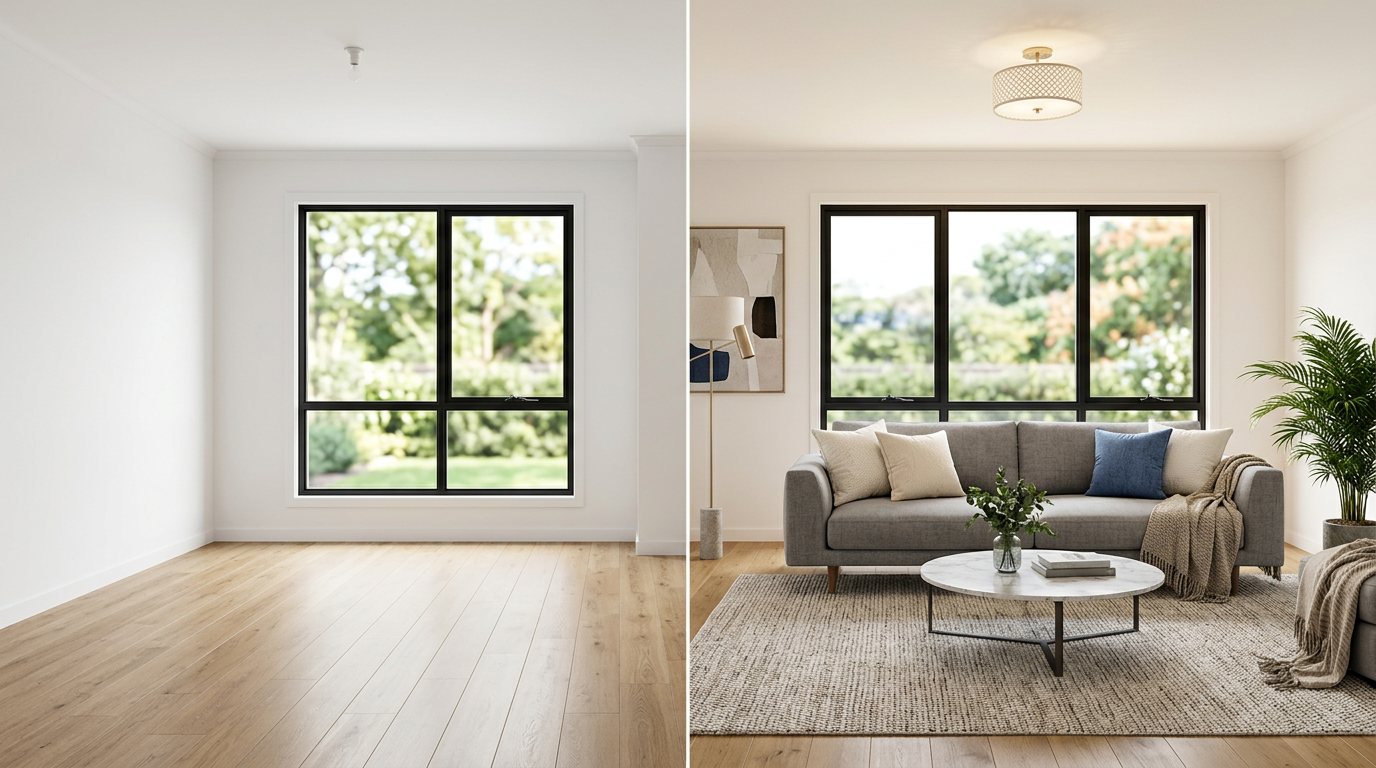
In the last five years, virtual staging technology has leaped from "obviously fake" to "indistinguishable from reality." By using high-end 3D rendering, designers can take a photo of an empty room and add hyper-realistic furniture and decor.
Why Modern Agents are Pivoting to Digital
- Incredible Cost Efficiency: While physical staging costs thousands, virtual staging usually costs between $30 and $100 per room. For the price of staging one room physically, you could virtually stage an entire mansion.
- Speed of Execution: Need to get a listing live by Friday? Physical stagers need lead time. Virtual staging can often be turned around in 24 to 48 hours.
- Style Flexibility: Is the home a mid-century modern gem or a sleek contemporary condo? With virtual staging, you can tailor the furniture style to the specific demographic you’re targeting.
Using these digital assets can also help you stand out during your initial pitch. If you're looking to elevate your game, learning how to use high-end marketing to justify your full commission rate is a game-changer for top-tier agents.
The ROI Showdown: The Numbers Don't Lie
Let’s look at a hypothetical scenario to see how the ROI actually shakes out. Imagine a $500,000 listing that is currently sitting empty.
Scenario A: Physical Staging
- Investment: $4,000 (Staging fee + 3 months furniture rental).
- Result: Home sells in 15 days for $515,000 (3% over asking).
- Net Gain: $11,000 after staging costs.
- ROI: 275%
Scenario B: Virtual Staging
- Investment: $300 (6 high-quality virtually staged photos).
- Result: Home sells in 20 days for $512,000 (2.4% over asking).
- Net Gain: $11,700 after staging costs.
- ROI: 3,900%
While physical staging might result in a slightly higher sales price due to the in-person experience, the Return on Investment for virtual staging is often exponentially higher because the initial cost is so low. For many mid-range homes, the difference in final sale price between physical and virtual staging is negligible, making virtual the clear winner for the agent's or seller's budget.
When to Choose Physical Staging
Despite the high ROI of virtual staging, there are times when physical staging is the only way to go. Luxury listings (typically $1M+) almost always require physical staging. At that price point, buyers expect a certain level of "concierge" experience. If they see beautiful photos online but walk into a cold, echoing shell of a house, the psychological disconnect can be jarring.
Physical staging is also vital if the home has a very confusing layout. If buyers can't figure out where a bed would even fit in the primary suite, you need a physical bed there to prove it works.
When to Choose Virtual Staging
Virtual staging is the king of the "entry-level" and "mid-market" listing. It’s also the perfect solution for:
- Vacant New Construction: When you have multiple identical units, you can virtually stage one and use the photos for all of them.
- Tenant-Occupied Properties: If the current tenant has... let's say "unique" taste in decor, virtual staging can help buyers look past the clutter.
- Fixer-Uppers: You can use virtual renovation to show what the home *could* look like with new floors and a kitchen island.
To maximize the impact of your digital assets, consider how they play with other tech. We've compared 3D virtual tours vs. video walkthroughs to help you decide which tech stack best supports your staged photos.
The Best of Both Worlds: The Hybrid Strategy
Many elite agents are now using a hybrid approach. They might virtually stage the listing photos to grab attention on Zillow and Instagram, but then place a few physical "vignettes" in the home—perhaps a bistro set on the balcony or a high-end coffee station in the kitchen. This provides a tactile touchpoint without the $5,000 price tag.
Another pro-tip: If you virtually stage a room, print out large foam-core boards of the staged photos and place them on easels in the corresponding empty rooms. This bridges the gap for buyers during the open house, allowing them to look at the empty space and the "vision" simultaneously.
Actionable Tips for Virtual Staging Success
- Disclose, Disclose, Disclose: Always include a small watermark or a note in the listing description stating that some photos are virtually staged. Transparency builds trust.
- Keep it Realistic: Don't let your digital designer put a grand piano in a 10x10 room. If the furniture doesn't fit the scale of the room, buyers will feel cheated when they arrive in person.
- Focus on Lighting: The secret to great virtual staging is the shadow work. Ensure your digital furniture casts realistic shadows based on the windows in the photo.
Final Verdict: Which Offers Better ROI?
If we are looking strictly at the ratio of dollars spent to dollars earned, virtual staging is the undisputed ROI champion. It allows agents to provide a high-end look on a bootstrap budget, significantly reducing the days on market without the heavy financial risk of furniture rentals.
However, the "best" choice always depends on the specific property and target demographic. If you're selling a multi-million dollar estate, the ROI of physical staging is found in the prestige and the emotional closing power it provides. For everything else? Let the digital tools do the heavy lifting.
Ready to take your listing presentation to the next level? At The Listing Showcase, we specialize in the high-end visual assets that turn "just listed" into "just sold." Whether it's professional photography, floor plans, or virtual magic, we've got you covered.