How to Market a Home with an ADU: 7 Tips for Extra Value
Turn a simple granny flat into a high-value asset that attracts investors and families alike.
The Rise of the ADU: Why It’s More Than Just a “Granny Flat”
Remember when a backyard cottage was just where your eccentric aunt stayed during the holidays? Those days are long gone. Today, Accessory Dwelling Units (ADUs) are the crown jewels of the real estate market. Whether they are called carriage houses, casitas, or basement apartments, these secondary units have become the ultimate solution for a housing market defined by high interest rates and a need for flexibility.
But here’s the catch: you can’t just list an ADU as a “bonus room” and expect the offers to pour in. To truly capture the value of an ADU, you have to market it as a lifestyle and financial solution. Are you selling a multi-generational sanctuary? A high-yield short-term rental? Or the ultimate work-from-home retreat? If you aren't specific, you're leaving money on the table.
In this guide, we’re diving into seven actionable strategies to ensure your ADU listings stand out, command higher prices, and speak directly to the needs of modern buyers.
1. Define the ADU’s “Identity” and Buyer Persona
Before you even snap your first photo, you need to decide who this ADU is for. A home with an ADU appeals to three distinct types of buyers, and your marketing should speak to all of them—or the one most likely to buy in your specific neighborhood.
- The Multi-Generational Family: They need accessibility, safety, and proximity to the main house.
- The Savvy Investor: They want to know about ROI, separate utilities, and local rental laws.
- The Remote Professional: They are looking for quiet, high-speed internet capability, and a clear distinction between “home” and “work.”
By defining this identity early, you can tailor your listing description to address their specific pain points. If you're struggling with the wording, how to write compelling real estate listing descriptions that sell is a great resource to help you find the right voice for each persona.
2. Use Floor Plans to Prove Independence
The number one question every buyer has when they see an ADU in a listing is: "How close is it to the main house?" People value their privacy. If the ADU feels like it’s “right on top” of the main living area, its value drops significantly.
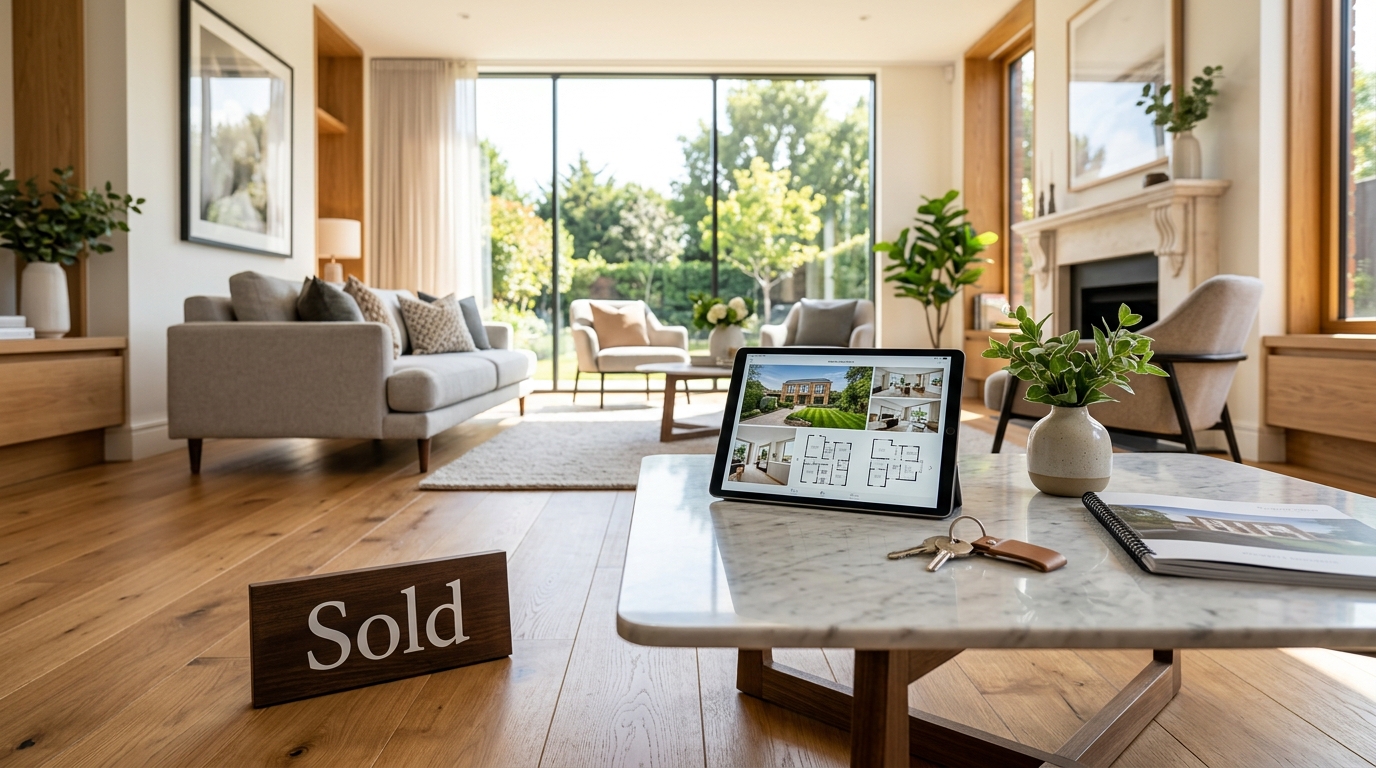
This is why you must include professional floor plans. A 2D or 3D floor plan allows a buyer to see the physical separation between the two structures. It highlights the separate entrance, the private walkway, and the orientation of windows. There are 7 reasons to add floor plans to your real estate listing strategy, but for an ADU, the primary reason is to establish the unit as a truly independent living space rather than just an extension of the house.
3. Show, Don’t Just Tell, the Income Potential
If the ADU is legal for long-term or short-term rentals, don't just mention it—prove the value. Most buyers have a hard time visualizing math while they are looking at a kitchen backsplash. Do the heavy lifting for them.
Create a “Financial Potential” sheet to include in your marketing materials or your digital listing. Include:
- Estimated monthly rent for a long-term lease based on local comps.
- Average nightly rates and occupancy levels for Airbnbs in the area.
- A projection of how that income offsets the buyer’s mortgage.
When you show a buyer that a $4,000 mortgage can be reduced to $2,500 thanks to the ADU, the property suddenly becomes much more affordable. For those focusing on the vacation rental angle, check out these 7 visual marketing tips for short-term rental and airbnb listings to make that unit look like a five-star destination.
4. Stage the ADU for Maximum Versatility
An empty ADU often looks like a fancy garage. To help buyers understand the scale, you need to stage it. However, ADUs are often compact, which presents a unique challenge: how do you make a 400-square-foot studio look like a viable home?
The key is using “apartment-sized” furniture and keeping the decor light and airy. Use mirrors to bounce light and define zones (sleeping, living, working) without using bulky dividers. If you’re working with a tight footprint, you might want to review how to stage small spaces: 7 tips to make tiny rooms look massive. Showing a queen-sized bed and a small bistro table in the space proves it’s a functional residence, not just a storage shed.
5. Capture the “Transition” in Your Photography
Most real estate photographers take photos of the main house and then separate photos of the ADU. This is a mistake. To market an ADU effectively, you need to show the relationship between the two buildings.
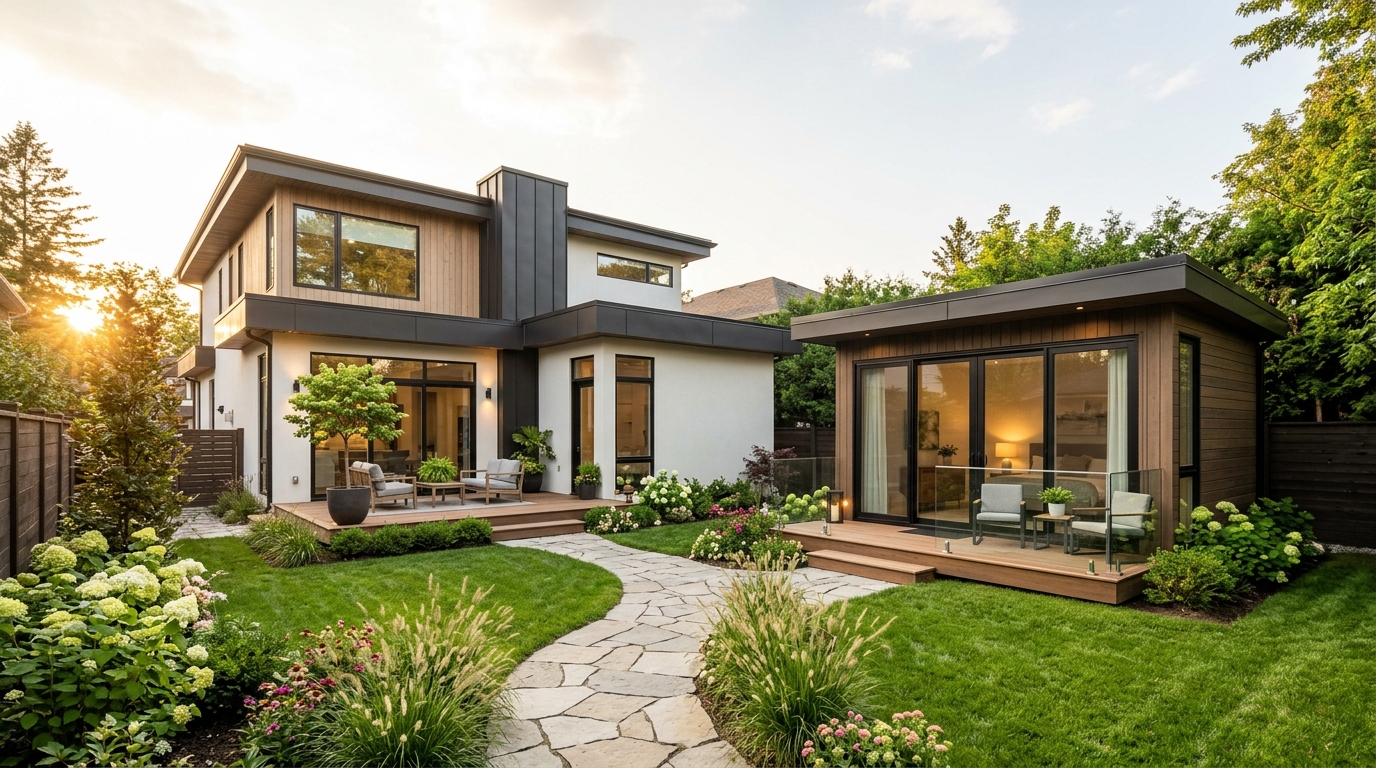
Ask your photographer to capture “transition shots.” These are wide-angle photos that show the path from the main house’s back door to the ADU’s front door. Use drone photography to get an overhead view of the entire lot. This helps the buyer understand the layout, the yard space remaining, and the level of privacy. It’s about selling the entire “compound” lifestyle, not just two separate boxes on a lot.
6. Be the Expert on Compliance and Permits
Nothing kills a deal faster than a buyer finding out mid-escrow that the "guest house" was built without permits and can't actually be rented out. In your marketing, be proactive. If the ADU is fully permitted and "legal," shout it from the rooftops.
Include a section in your listing packet that covers:
- Permit status and certificates of occupancy.
- Utility setup (Is it on a sub-meter? Is it shared?).
- Local zoning laws regarding ADUs (e.g., can the owner live in the ADU and rent the main house?).
By providing this information upfront, you build trust and eliminate the “fear factor” that often comes with unique property features. It positions you as a true professional who has done the homework.
7. Highlight Smart Features and Efficiency
Modern ADUs are often built with the latest technology and energy-efficient materials. Because they are smaller, they are cheaper to heat and cool—a major selling point for eco-conscious buyers or those looking to minimize overhead.
Highlight features like mini-split HVAC systems, tankless water heaters, and smart locks that allow for remote check-ins for guests. If the unit is tech-forward, emphasize that. Buyers love the idea of a “plug-and-play” rental or office. For more on this, look at how to market smart home features to see which tech additions add the most perceived value.
Final Thoughts: Selling the Dream of Flexibility
At the end of the day, marketing a home with an ADU is about selling flexibility. In an uncertain economy, a property that can adapt to a buyer's changing needs—whether that’s a place for a parent, a source of income, or a private office—is incredibly powerful. Use these tips to ensure your next ADU listing doesn't just get noticed, but gets sold for the premium it deserves.
Ready to showcase your next listing with professional floor plans and stunning visuals? Let's make sure that ADU gets the spotlight it needs to shine.